

You have a software idea and two quotes. One is from a local team. The other is from a team abroad, and it costs much less. It is easy to pick the cheaper one. But the price says little about who owns your code. It also hides who answers your calls and where your data sits.
An offshore software development partner can work well. It can also go wrong in ways a quote never shows. This guide explains the model, how it goes wrong and six questions to ask before you sign.
Key takeaways
- An offshore partner is a team in another country that builds software for you under a contract.
- Most companies keep outsourcing, but 70% have moved some work back in-house.
- The day rate is the part you can see. Rework, code access and delays are the part you pay for later.
- Ask six questions before you sign: code ownership, who leads, data location, communication, support and what the quote covers.
- Fixed scope suits offshore. A scope that keeps changing needs a team you can reach easily.
What is an offshore software development partner?
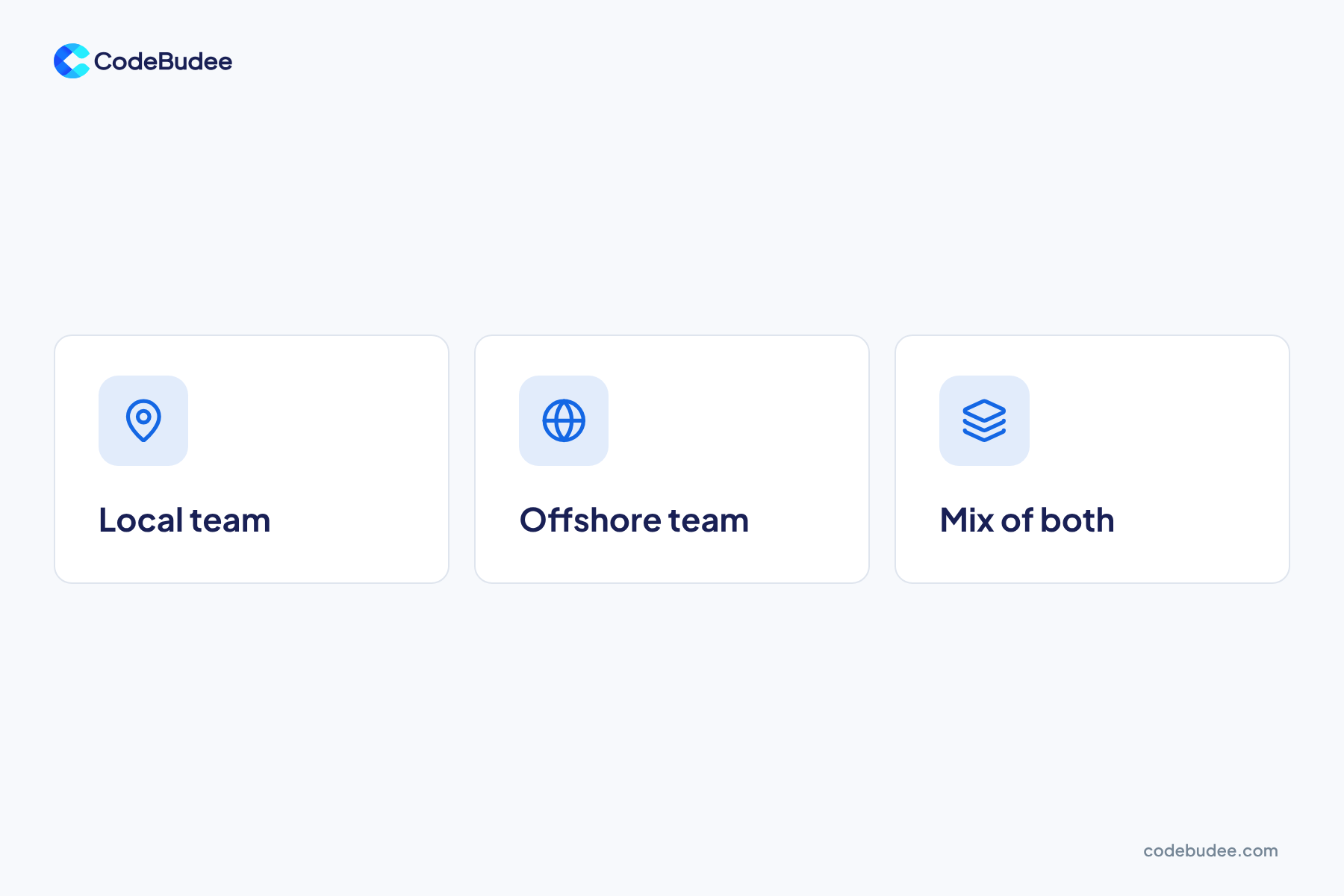
An offshore software development partner is a company in another country that designs and builds software for you. You sign a contract, agree on the work and pay for it. The team works in its own office and its own time zone. A local partner works in your country. Many firms use a mix of both.
Look at the word "partner" first. A partner stays with you after launch. A vendor delivers a build and leaves. Before you sign, decide which one you are buying.
Why do companies still use offshore teams?
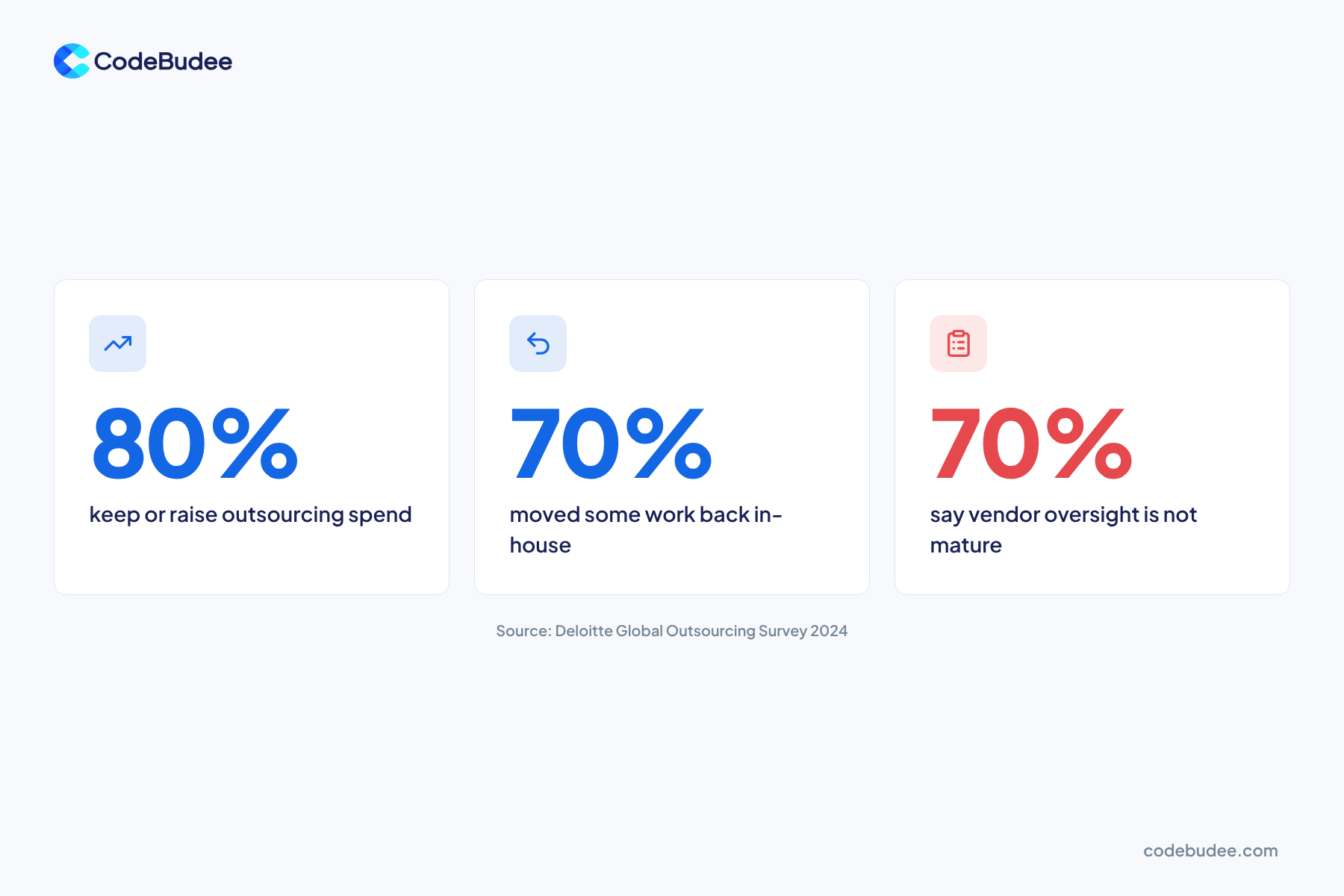
Companies use offshore teams to reach skills they cannot hire and to cut cost. Deloitte's 2024 Global Outsourcing Survey asked more than 500 executives. Skilled talent and agility joined cost as key drivers. Demand is not falling.
That survey also shows the risk. It found that 80% of executives plan to keep or raise their spending on third-party outsourcing. It also found that 70% have selectively moved work back in-house over the last five years. And 70% say their vendor management office, the team that oversees outside suppliers, is not fully mature.
Read those numbers together. Many buyers keep outsourcing. Many also learn that a supplier needs close oversight, and some are not ready to give it.
What can go wrong with an offshore partner?
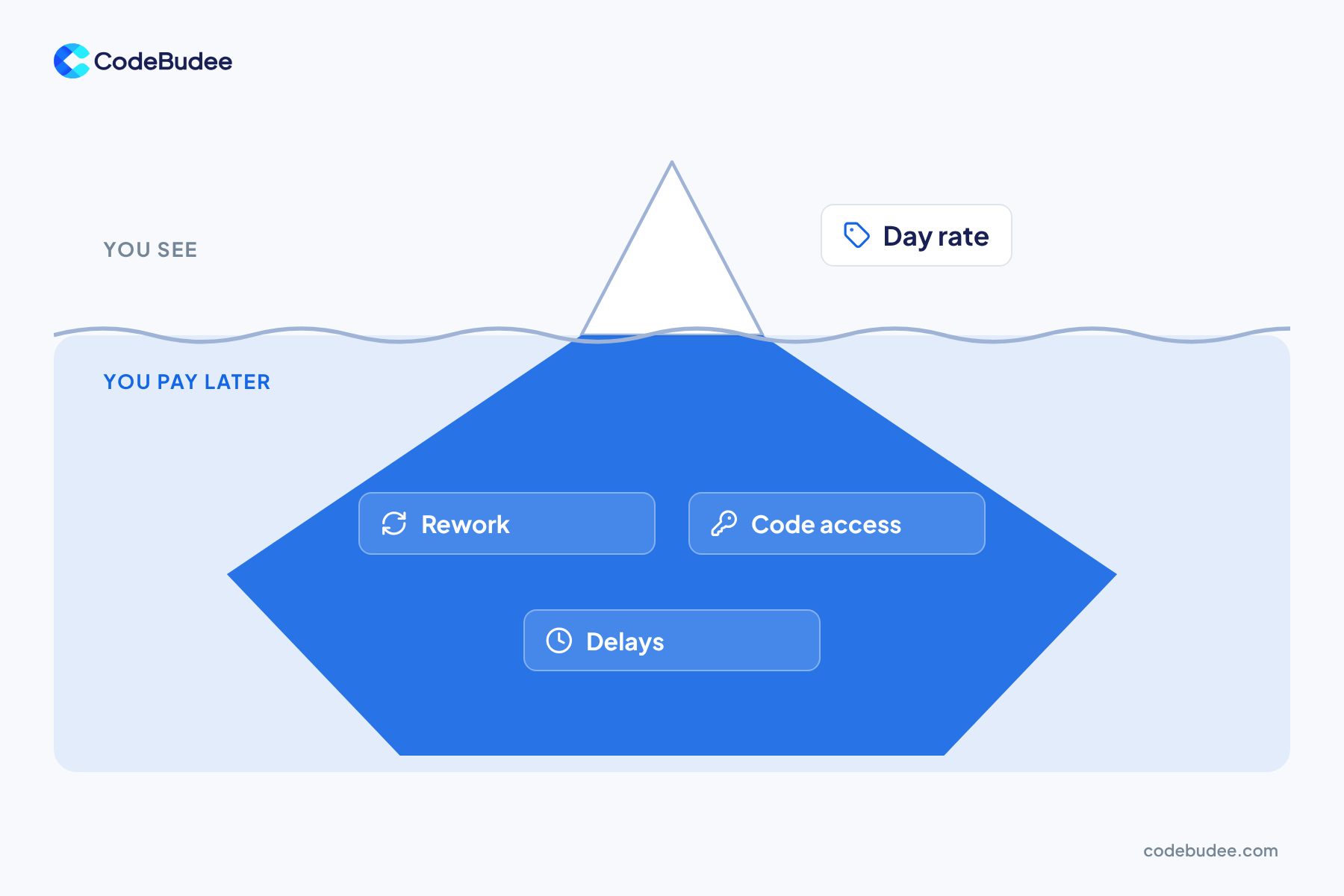
Your day rate is only the part of the cost you can see. Below it sit rework, weak code handover and delays. They appear after you have signed and paid a deposit. A cheap quote can end up costing more than a local one.
Here is how each one shows up:
- Rework: the team builds what the document said, not what you meant. You pay again to fix it.
- Code access: the code sits in the partner's own account. If you leave, you may not get it all.
- Delays: a question can wait a day for an answer. A small change can wait a week for a slot.
None of these is certain. They are the usual places where a loose contract and a weak brief let problems in. The six questions below close each gap.
What are the 6 questions to ask before you sign?
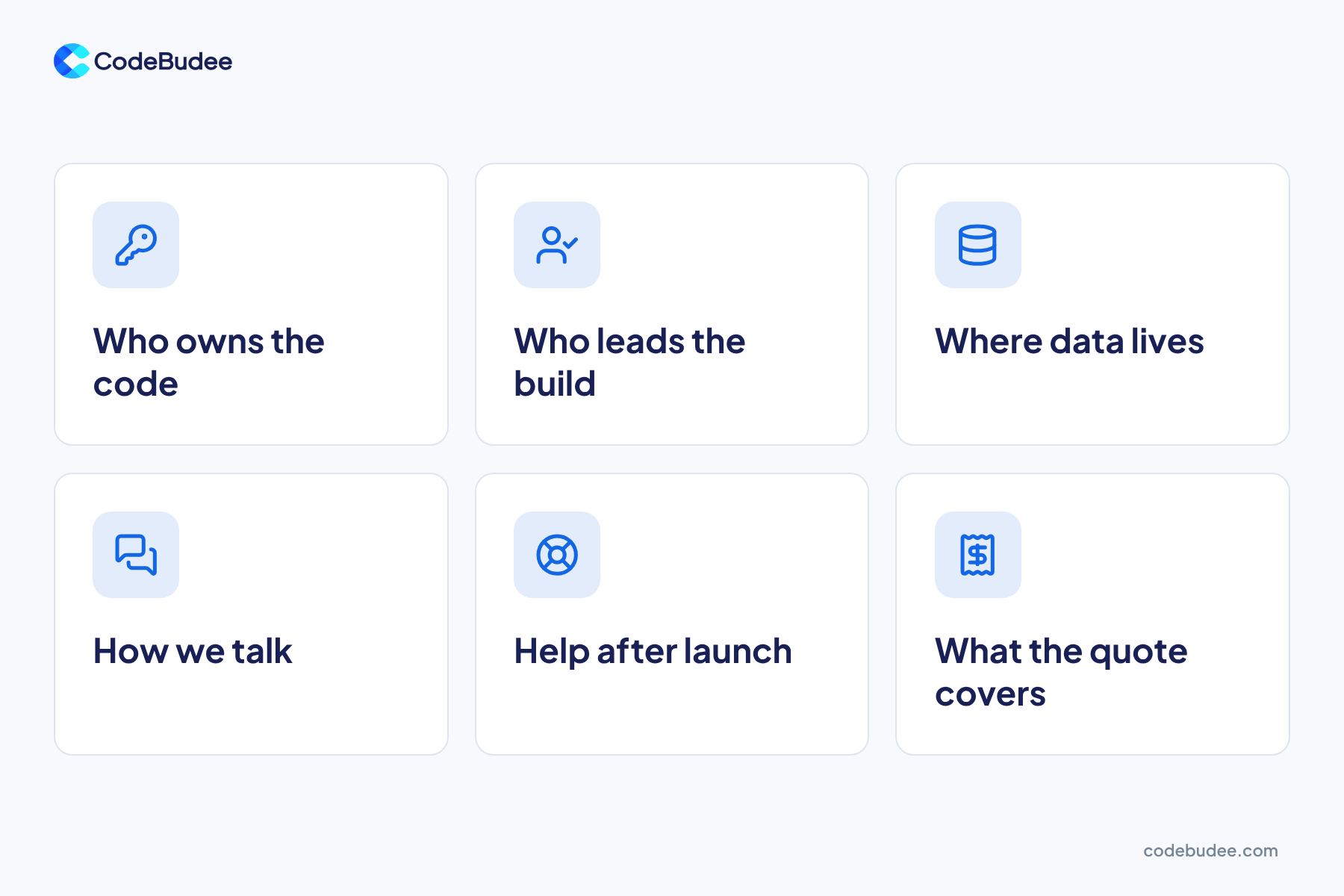
Before you sign with an offshore software development partner, ask six questions. They cover code, leadership, data, talk, support and the quote. A good partner answers each one in writing.
- Who owns the code? The contract should say you own 100% of the source code. It should also say when it is handed over. Ask to see the clause.
- Who leads the build? Ask to speak to the person in charge of your project, not only to a salesperson. Check that this person stays on it.
- Where does our data live? Ask which country holds your data, and who on their side can see it. Get the answer in the contract.
- How will we talk? Agree the meeting times, the language and the tools. Check that the working hours overlap with yours.
- What happens after launch? Ask who fixes bugs, who updates the system and what that costs each year.
- What does the quote cover? Ask for an itemised quote. Check that testing, project management and changes are listed.
If a partner dodges any of these, treat it as your answer.
Does your data leave the country?

Yes, it can, and the law cares. In Malaysia, sending personal data out of the country is now allowed only when a set condition is met.
Malaysia changed its data law in 2025. According to Mayer Brown's 2025 review of the changes, the cross-border transfer guidelines were issued on 29 April 2025. The same review says the maximum fine for breaching the data protection principles rose from RM300,000 to RM1,000,000.
Breaches are costly too. IBM's 2026 Cost of a Data Breach report puts the global average at $4.99 million. That is up 12% on last year.
Keep real customer data out of the test system. Give the team only the access it needs. Write the data rules into the contract.
Offshore, local or a mix: how do you choose?
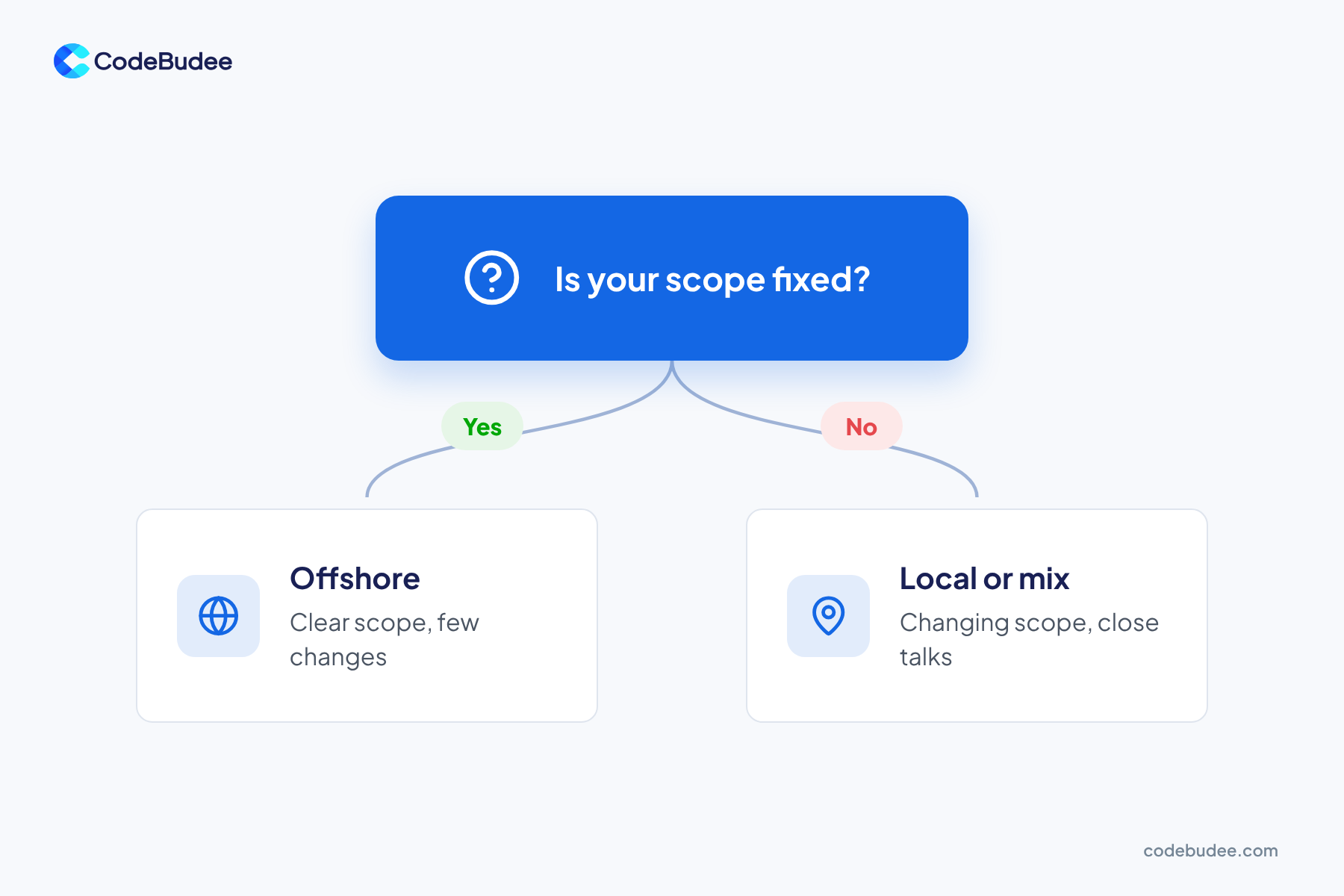
Choose offshore when your scope is fixed and the work is clear. Choose a local team, or a mix, when the scope will change and you need to talk often. The question is how much you will need to change your mind once the build starts.
- A fixed, well-written scope: offshore can work, because there are few questions to ask.
- A scope that will change: pick a team you can reach easily, in your own time zone.
- A system your business runs on: pick a partner that stays after launch, wherever it sits.
Bottom line: pick the partner who owns up to problems early. Do not pick the lowest day rate.
How does CodeBudee approach this?
We are a software company in Penang, Malaysia, and we serve clients in Malaysia, Singapore and Australia. You talk directly to the person leading your build, with no middlemen. You get a clear, itemised quote with no hidden costs. And you own 100% of the source code at the end.
We built a property system for an Australian agency. It replaced a rented one that could not be changed. The client owns it outright. You can see more on our work page. Our custom web app development service covers systems like this.
If you are still weighing quotes, our guide to what custom software costs shows what sets the price. For a short checklist of what to look for, read how to judge an app developer in Malaysia. And if your current developer is slow, see five signs it is time to move on.
Frequently asked questions
Is an offshore software development partner cheaper?
Often the day rate is lower. But the total cost depends on rework, delays and how well the scope is written. A cheap quote with a vague scope can cost more than a fair quote with a clear one. Compare the full cost of the project, not the day rate.
What is the biggest risk of offshore software development?
Losing control is the biggest risk. That means you do not own the code, do not know who works on it or cannot reach anyone. All three can be fixed with a clear contract and one named lead on your project.
How do I keep my data safe with a team abroad?
Keep real customer data out of the test system. Give the team only the access it needs. Ask where your data is stored and who can see it. Write the answers into the contract, and check your local data law before you share anything.
Should a small business use an offshore team?
It can, if the scope is clear and you can review the work often. If your needs will change as you learn, a team in your own time zone is easier to manage. Start with a small, fixed first phase to test the fit.
Next step: choose a partner who stays
Cheap quotes are not a plan. Ask the six questions and put the answers in the contract. Then pick the team that will still be around after launch. If you want to talk it through, you can book a free consultation with us. We can go through your quotes and the questions above with you.
