
You pay for an ad, someone clicks, and they land on your homepage. They see a menu, a banner and a dozen links. The offer they clicked for is hard to find, so they leave.
A landing page fixes that first step. This guide explains what a landing page is and how it differs from your homepage. It shows what makes one work, using real benchmark data. It also covers a step that gets less attention: what happens to the lead after the form.
Key takeaways
- A landing page is a single web page built for one campaign, with one clear action for the visitor.
- Your homepage serves many goals. A landing page serves one, and its message matches the ad.
- Across more than 41,000 landing pages, Unbounce found a median conversion rate of 6.6% in 2024. That is the share of visitors who took the action.
- Google rates landing page experience as one part of the Quality Score for search ads.
- A landing page pays off only when each booking, payment or enquiry reaches the right system and person.
What is a landing page?
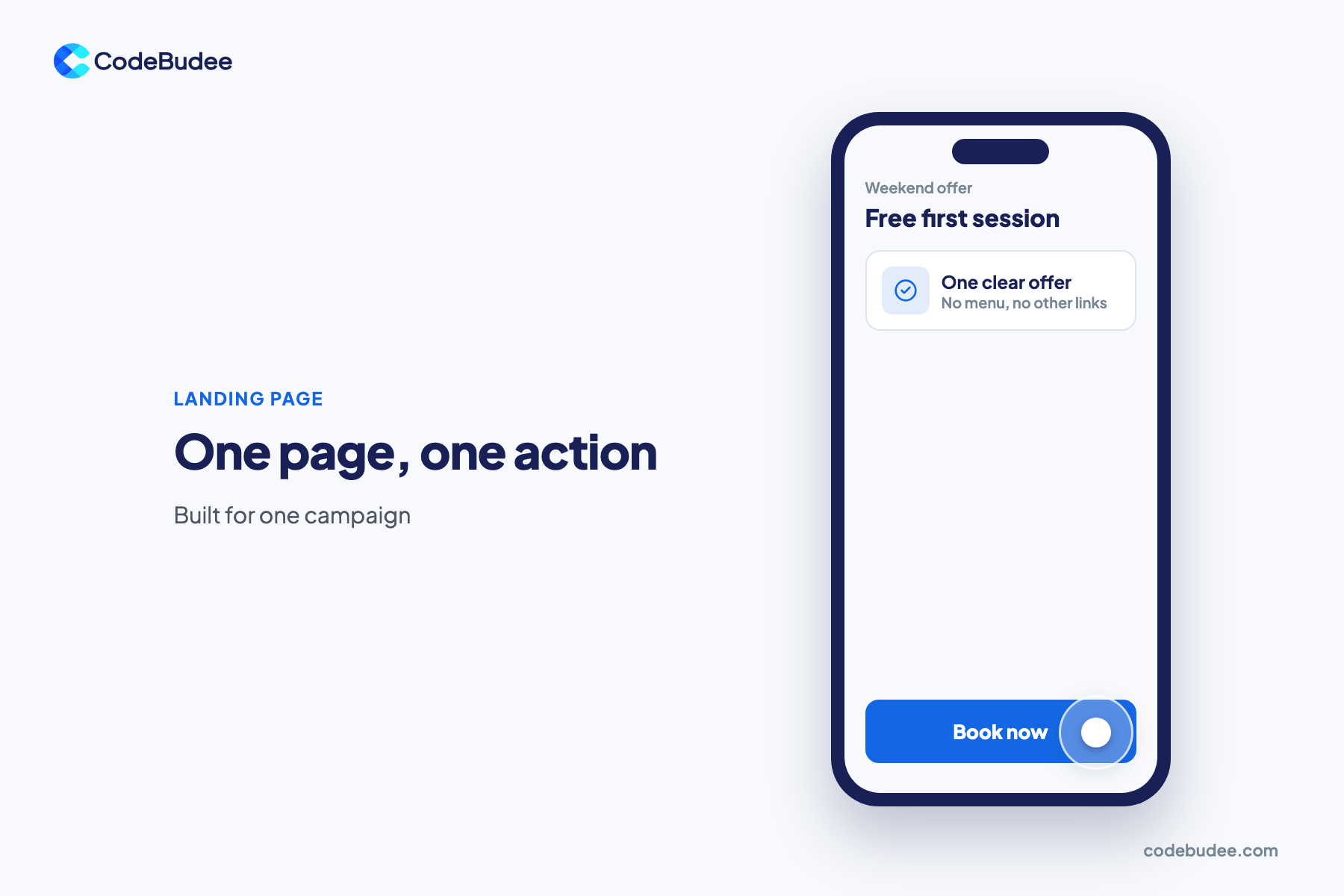
A landing page is a single web page built for one campaign and one action. A visitor arrives from an ad, an email or a social post. The page makes one offer and asks for one step, such as booking, buying or leaving details. Everything else on the page supports that step.
The name comes from where people "land" after they click. A landing page usually has no main menu. Fewer links mean fewer ways to wander off.
Businesses use them for a seasonal promotion, a free consultation, an event sign-up or a service launch. Each campaign can have its own page, with words written for that audience.
How is a landing page different from your homepage?
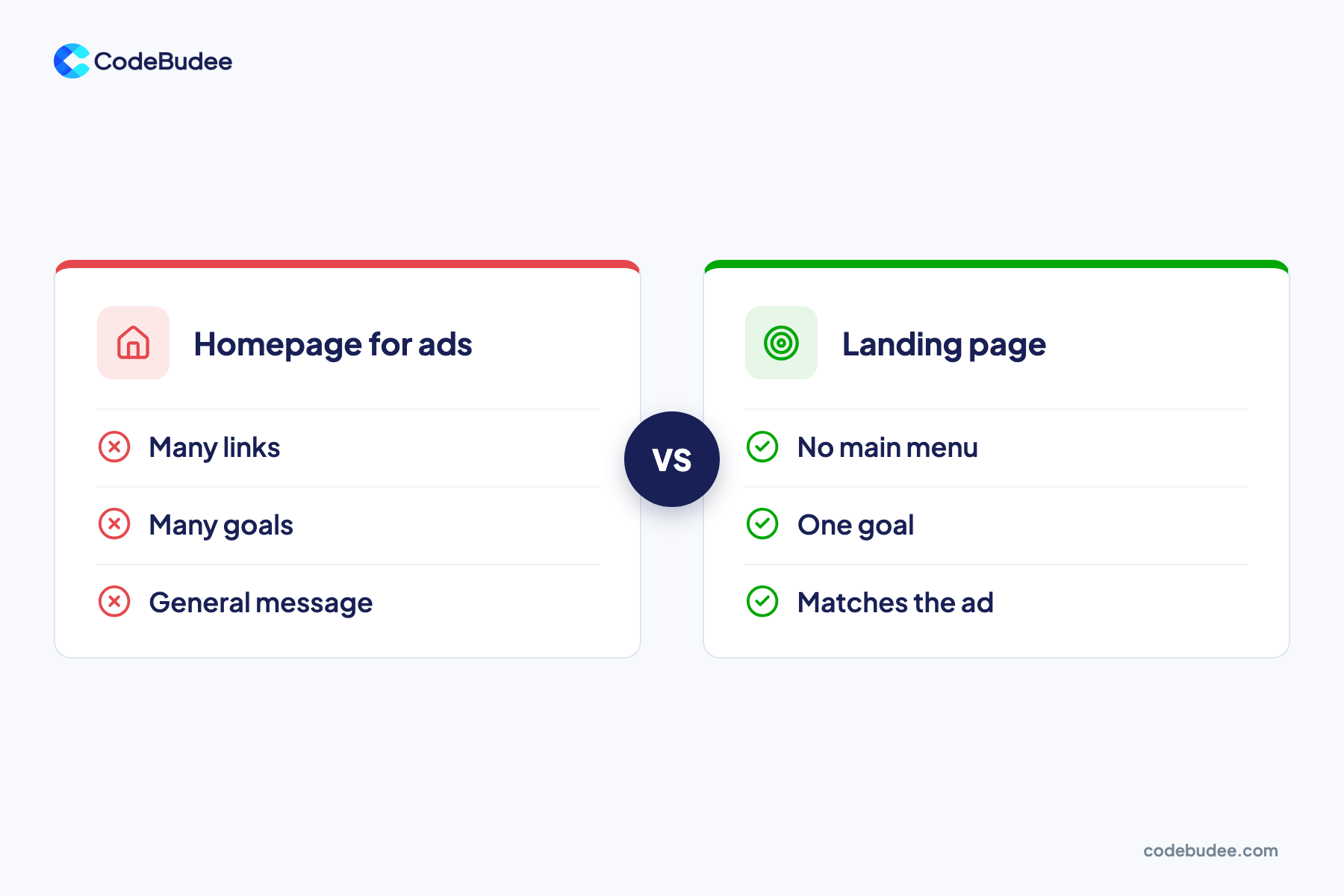
Your homepage introduces the whole business, so it has many links and many goals. A landing page has one goal, and its words match the ad that brought the visitor. Send ad traffic to a homepage and visitors must hunt for the offer. A landing page puts it in front of them.
Here is how the two compare:
- Homepage: a main menu, many links and a general message. It serves new visitors, past customers, job seekers and partners at once.
- Landing page: no main menu, one offer and one button. The headline repeats the promise in the ad.
Bottom line: keep your homepage for people exploring your business. Send paid ad clicks to a landing page built for that ad.
Your homepage still matters for search. See how website development affects SEO.
Why do landing pages matter for your ads?
Landing pages matter because the page decides whether a paid click becomes a customer. Google also judges the page when it rates your search ads. A focused page that loads fast and speaks plainly gives each click a better chance. A slow, busy page wastes the money you paid for the visit.
The numbers back this up:
- Google checks your page. It lists landing page experience as one of three parts of Quality Score for search ads. Google Ads Help defines it as how relevant and useful your page is to people who click.
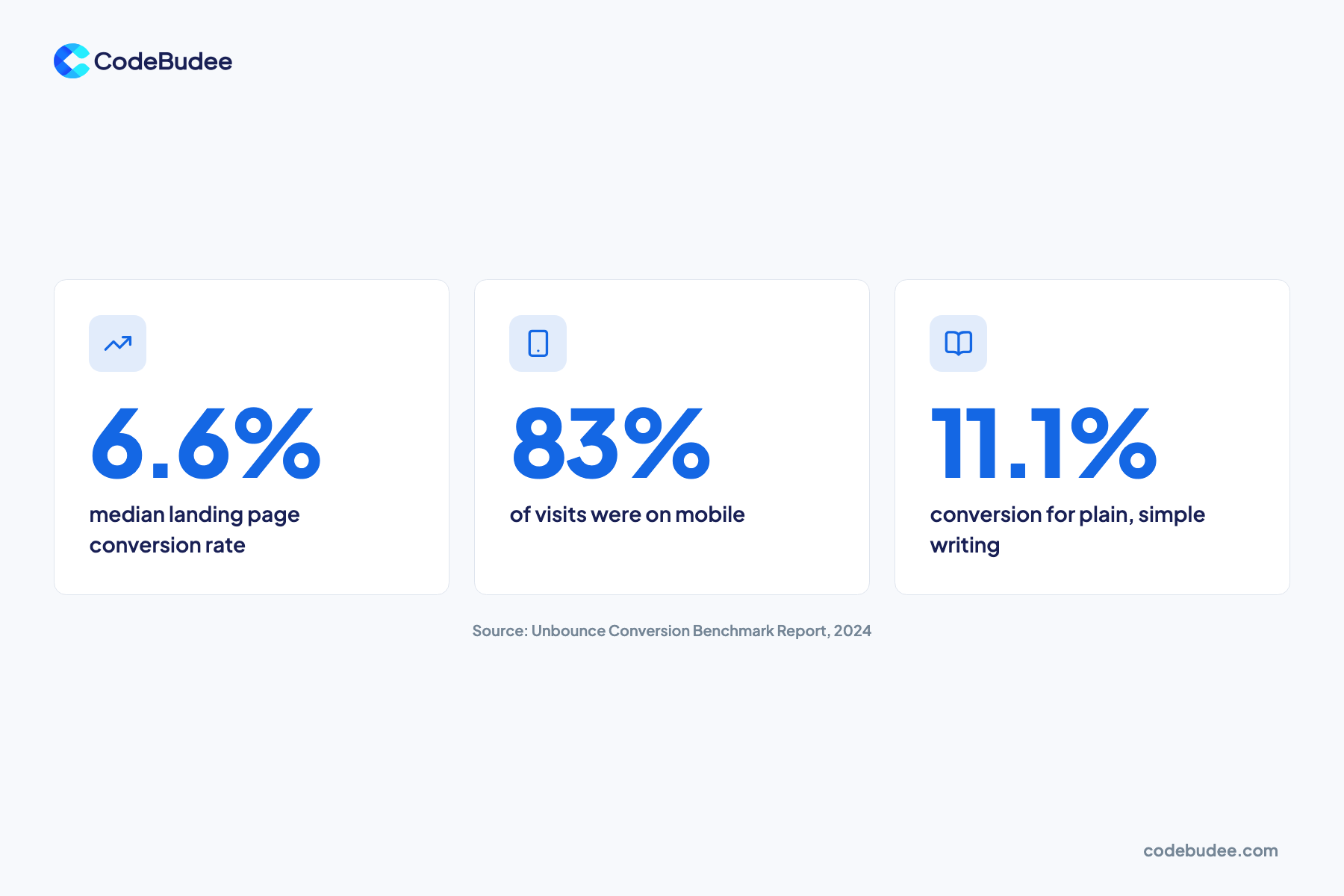
- A benchmark to compare against. Unbounce's 2024 Conversion Benchmark Report studied more than 41,000 landing pages. It found a median conversion rate of 6.6% across all industries.
- Most visits are on phones. In the same Unbounce report, 83% of landing page visits came from mobile devices. Yet desktop converted 8% better than mobile.
- Speed pays. A 2020 study for Google, run by 55 and Deloitte, looked at 37 brand sites. When mobile pages got 0.1 seconds faster, retail conversions rose 8.4%. This held only when every page in the journey improved.
Treat a benchmark as a rough guide. Your rate depends on your offer, your price and your audience.
What makes a good landing page?
Good landing pages make one clear offer, in plain words, and load fast on a phone. The headline matches the ad, and the form asks only for what you need. Real proof backs the offer. Each part removes a reason for the visitor to leave.
Check your page against these six points:
- One goal: one offer and one main button. Remove the main menu and side links.
- A headline that matches the ad: use the same words the visitor clicked on.
- Plain words: in Unbounce's 2024 data, pages written at a 5th to 7th grade reading level converted at 11.1%. Professional-level writing converted at 5.3%.
- Built for phones first: big buttons, short text and light images, since most visits come from mobile.
- A short form: ask only for what you need to follow up, such as a name and phone number.
- Real proof: genuine reviews, client names you have permission to use, or clear facts about your service.
What happens after someone fills in the form?
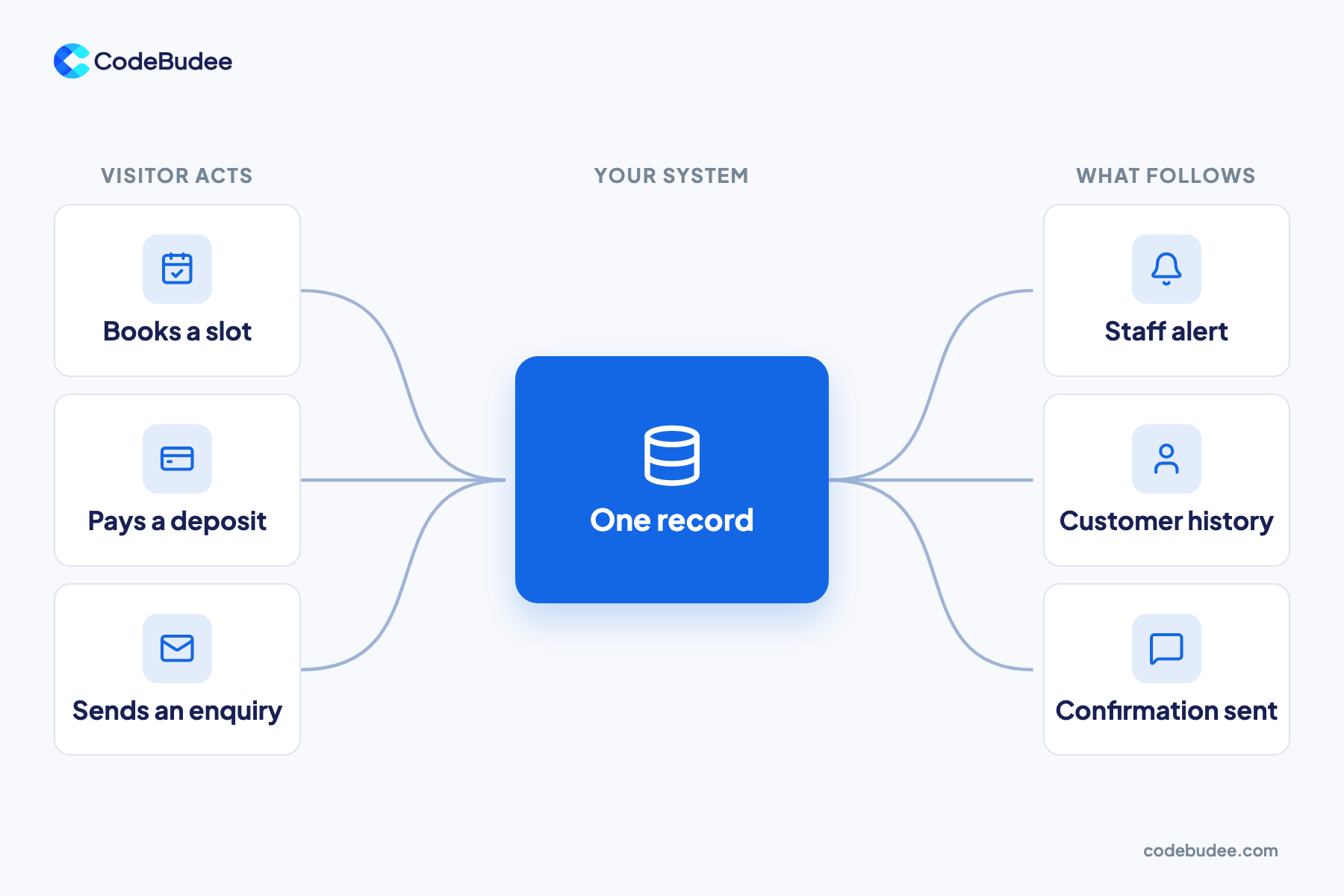
After the form, the lead has to reach the right person fast, with the details intact. If your form only sends an email, someone must copy it into a spreadsheet or booking system by hand. A better setup sends each booking, payment or enquiry straight into one system.
That copying step is where leads go cold or get lost. It also makes double bookings more likely. A connected landing page works in three steps:
- The visitor acts: they book a slot, pay a deposit or send an enquiry.
- One record is created: the details land in your booking or customer system, not in an inbox.
- The right things follow: staff get an alert, the customer history updates and a confirmation goes out.
Here is a real example. A facial chain we built for had grown to 20 branches while bookings were still keyed in by hand. We built a multi-branch booking website for them. Customers now book online themselves, instead of staff keying in every booking. For an Umrah travel agency, we built a booking website that takes deposit payments online. You can see both in our work.
If your site stops at an email, website development built around your bookings can fix that. For more on this, see how a custom booking system helps service businesses.
Frequently asked questions
Do I need a website, or is a landing page enough?
It depends on what you are testing. A single landing page can run one campaign or test a new offer. Most businesses still need a website as well. A website gives people a place to learn who you are before they book or pay. Your website and landing pages then work together, each with its own job.
What is a good landing page conversion rate?
There is no single good number. Unbounce's 2024 report found a median of 6.6% across all industries, based on more than 57 million conversions. Your rate depends on the offer, the price and how ready the visitors are to act. Compare your page with its own past results, and improve one thing at a time.
Can ChatGPT build a landing page?
AI tools can draft the words and layout of a simple landing page quickly. That is a useful start. But a page that takes real bookings or payments needs more. It must connect to your systems, protect customer data and keep working when traffic rises. An AI-built prototype is not a production system your business can depend on. See what to fix before real users arrive.
How long should a landing page be?
Long enough to answer the visitor's main questions, and no longer. In Unbounce's 2024 data, longer reading time and higher word count both went with lower conversion rates. Start with the offer, the key details, proof and one button. Add more only if visitors need it to decide.
Your next step
Think of a landing page as a focused page with one job: turning a click into an action. Match it to the ad, keep the words plain and make it fast on phones. Then make sure every booking, payment or enquiry lands in one system.
If your leads still arrive as emails that someone retypes, book a free consultation. We can talk through how your website and booking system could work as one.
