
Your team pastes a customer contract into an AI tool to get a quick summary. It works in seconds. But nobody asked where that contract went. It may now sit on a server in another country, under another country's law.
That is the question behind AI data residency. This guide explains what it means and why it matters in Malaysia, Singapore and Australia. It ends with five steps to take before you roll out an AI tool.
Key takeaways
- AI data residency is about where your data is stored and processed when you use an AI tool.
- Malaysian law now sets conditions for sending personal data abroad, and Australia holds you accountable for overseas recipients.
- A data breach costs $4.99 million on average, so a careless AI tool is an expensive risk.
- Control rises as you move from a public chat app to your own servers.
- Five short steps cut the risk before you roll out any AI tool.
What is AI data residency?
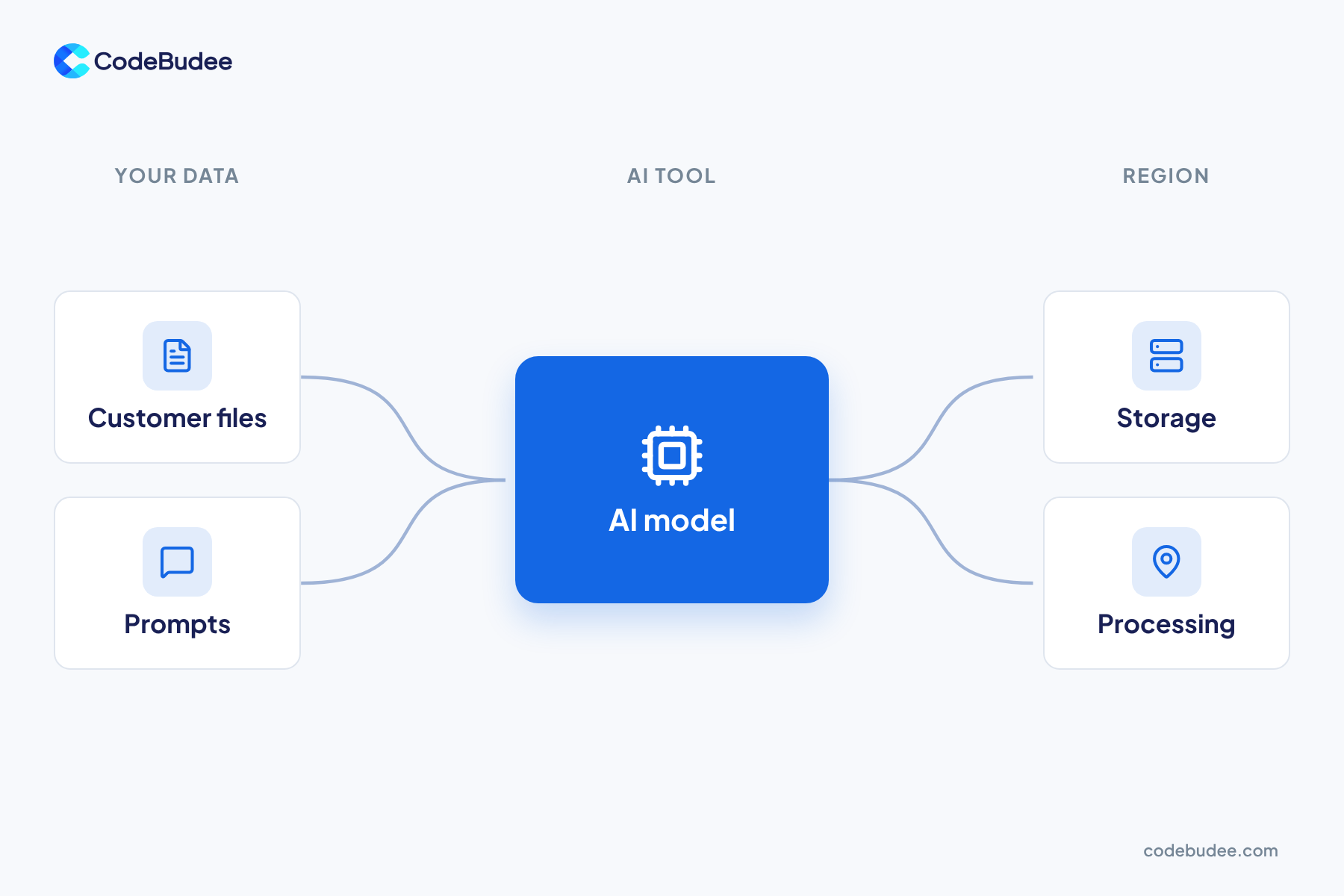
AI data residency means keeping your data in a chosen country when you use an AI tool. It covers two places. One is where your data is stored. The other is where the AI model reads it and works on it. A tool can store data at home and still process it abroad.
Data here means more than files. Every prompt you type counts too. If a staff member pastes in a customer name, that name has left your system.
Why does it matter for businesses in Malaysia, Singapore and Australia?
It matters because the law cares where personal data goes, and a breach is costly. Malaysia changed its data law in 2025. Australia has long held firms accountable for what overseas partners do with data. Singapore's data law also limits transfers abroad.
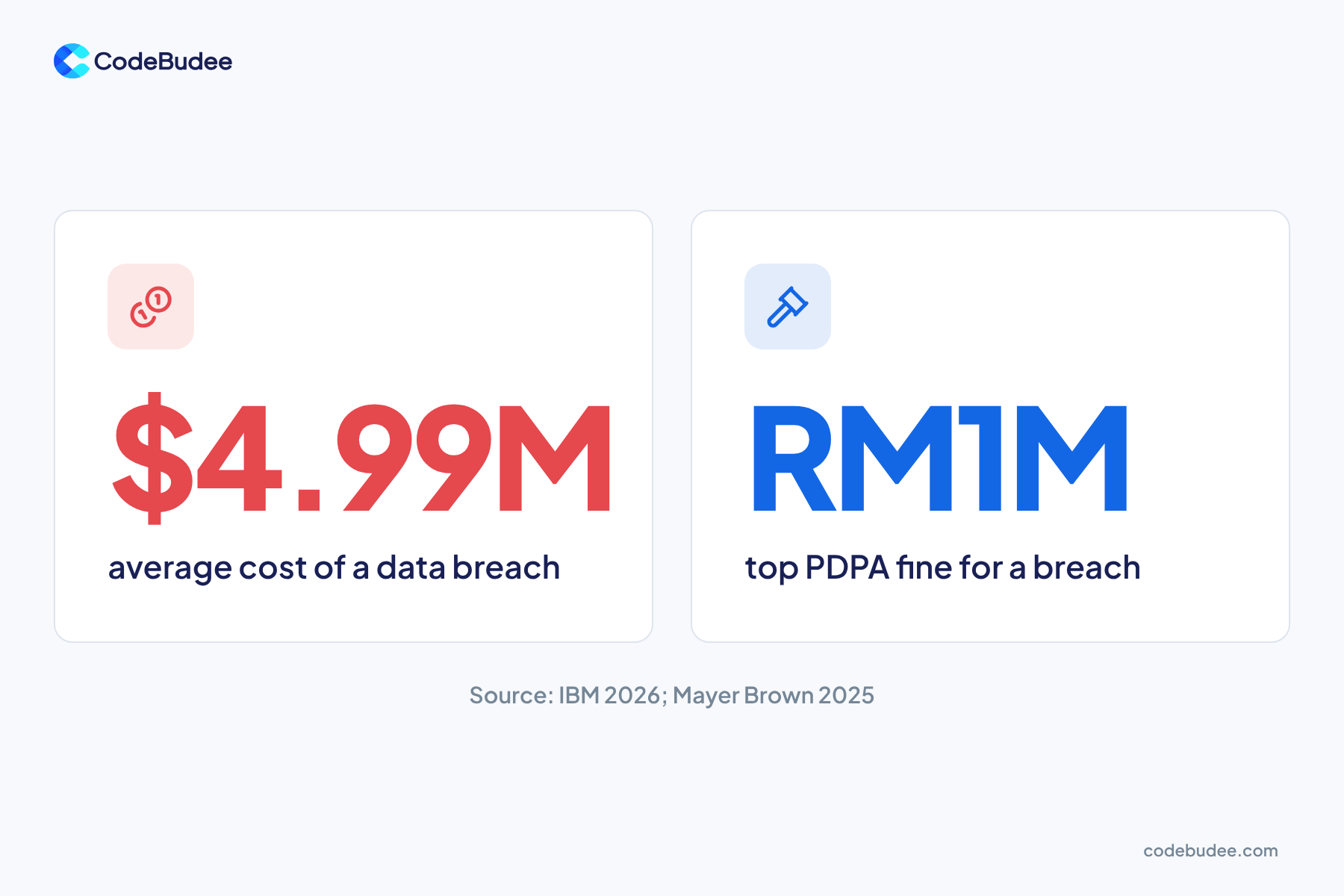
According to Mayer Brown's 2025 review, Malaysia issued its cross-border transfer guidelines on 29 April 2025. The review says the top fine for breaching the data protection principles rose from RM300,000 to RM1,000,000.
In Australia, the privacy regulator explains the rule in its guidance on cross-border disclosure. Before you send personal information overseas, you must take reasonable steps. These make sure the recipient does not breach the privacy principles. You are also accountable for what the overseas recipient does.
Cost matters as well. IBM's 2026 Cost of a Data Breach report puts the global average at $4.99 million. That is up 12% on the year before.
How much control do you have over your AI data?
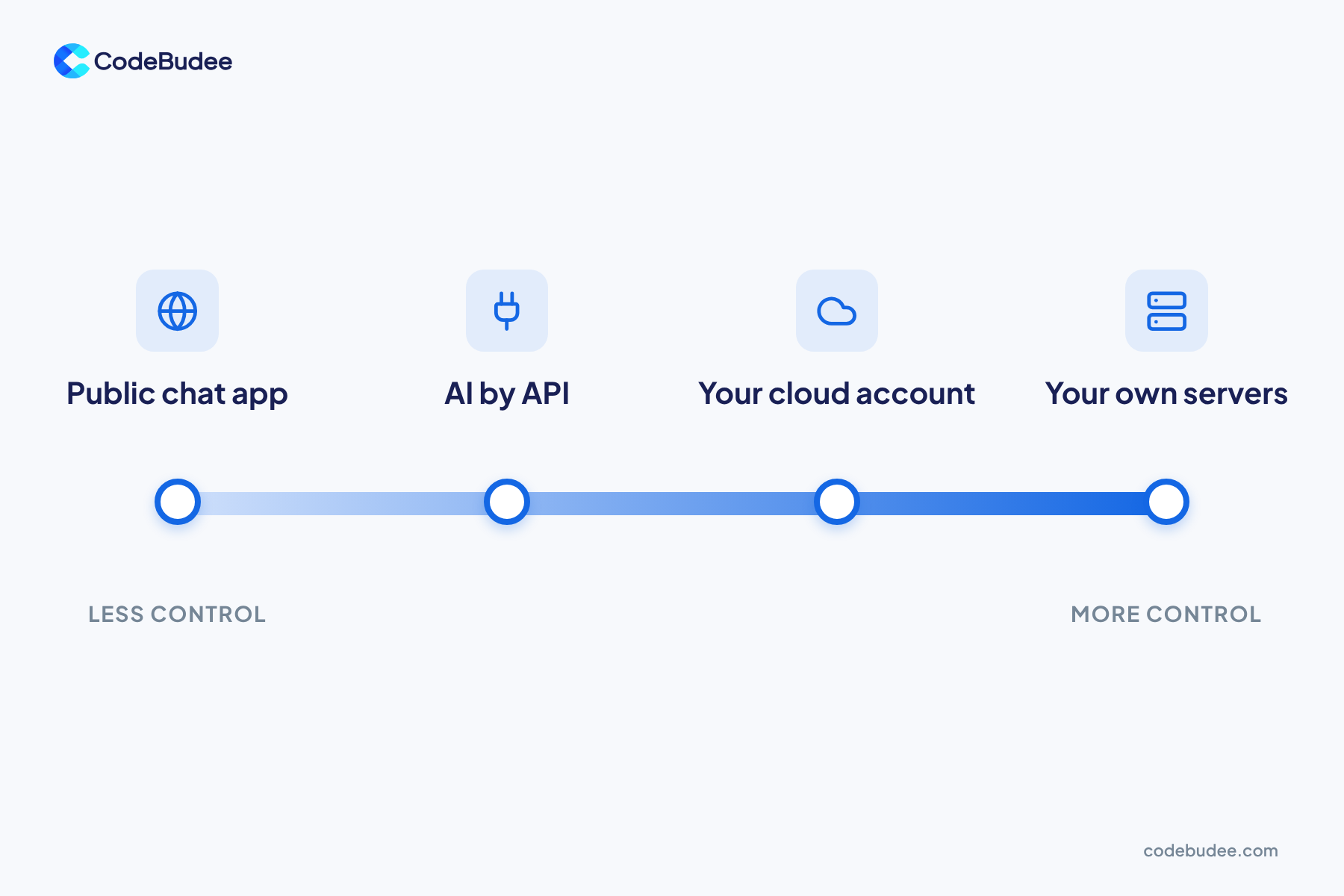
Control grows as you move from a public chat app towards your own servers. With a public app, the provider decides where your data goes. An API (a way for two systems to talk) lets you call an AI model from your own system. There you can often pick a region. In your own cloud account or on your own servers, you decide.
More control also means more work. Someone must set it up, secure it and keep it running. A public tool needs none of that. So the right level depends on how sensitive your data is.
Not all data needs the top level. Public marketing copy can go into almost any tool. Customer records, contracts and staff files need care.
What does the law ask you to do?

The law asks you to know where personal data goes and to stay accountable for it. Malaysia now lists set conditions for sending personal data abroad. Australia asks for reasonable steps and holds you accountable. Singapore limits transfers unless the recipient protects the data to a similar standard.
Here is what that means in daily work:
- Malaysia: one condition is that the destination has a law substantially similar to the PDPA, or ensures adequate protection. Other routes include consent and due diligence.
- Australia: take reasonable steps before you send data overseas. You stay accountable for what the recipient does.
- Singapore: check the transfer rules in the PDPA before data leaves the country.
This is not legal advice. Ask a lawyer about your own case. But the pattern is the same in all three: you must know where the data goes.
What are 5 steps to take before you roll out an AI tool?
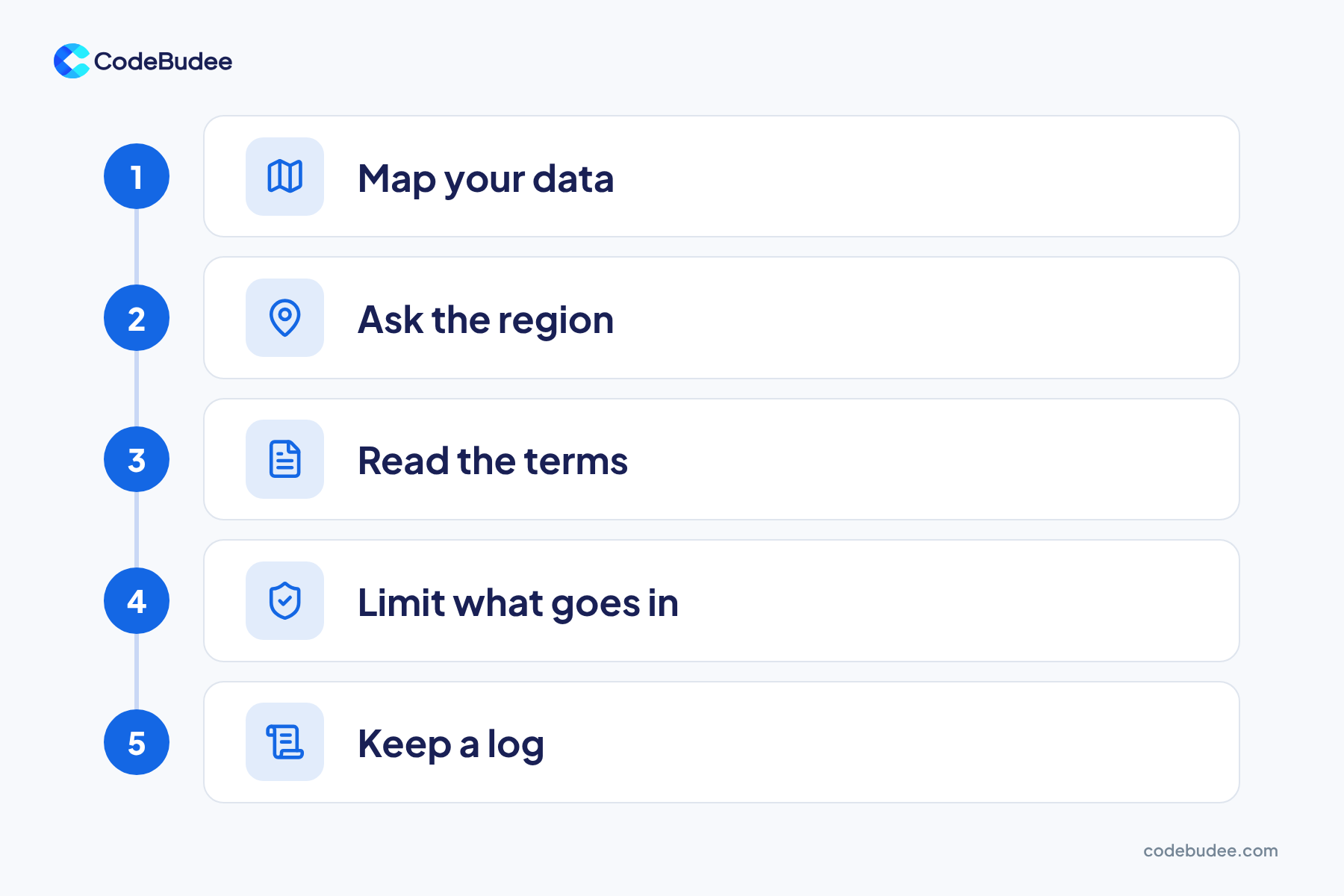
Before you roll out an AI tool, take five steps. Map your data, ask which region the tool uses and read its terms. Then limit what goes in and keep a log of use. Together the steps answer the question a regulator or a client will ask.
- Map your data: list what staff might paste in. Mark customer records, contracts and staff files as sensitive.
- Ask the region: ask the vendor where data is stored and where it is processed. Ask for the answer in writing.
- Read the terms: check if the vendor keeps your prompts and whether it trains its models on them.
- Limit what goes in: set a short rule for staff. Say what may be pasted and what may not.
- Keep a log: record which tools your team uses and for what. You cannot protect what you cannot see.
When should you build your own AI system?
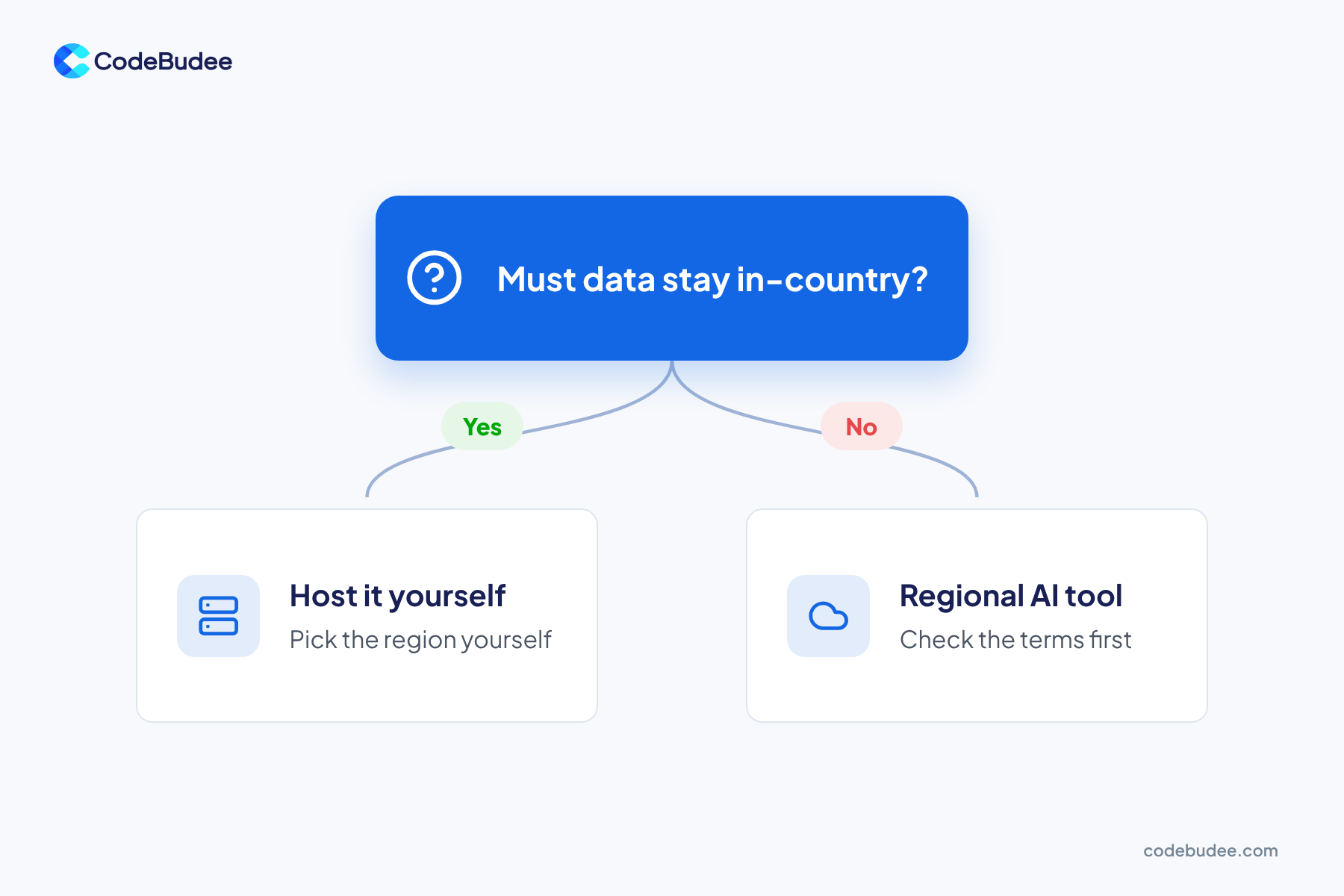
Build or host your own system when your data must stay in one country. Use a ready-made regional tool when the data is not sensitive and the vendor's terms are clear. The deciding question is whether you can accept a vendor's answer or must set the location yourself.
- Data may leave the country: a regional tool can work. Read the terms first.
- Data must stay in-country: host it yourself, so you choose the region.
- AI must work inside your own systems: a purpose-built system fits better than a chat tool.
Verdict: a ready-made tool is quick to start with. A system you host yourself gives you the final say on location.
How does CodeBudee approach this?
We build AI-powered solutions: new systems with AI at the core, not AI bolted onto someone else's software. You talk directly to the person leading your build. You get a clear, itemised quote with no hidden costs. And you own 100% of the source code at the end.
Where your data sits is a question to settle early. Our custom web app development service covers it. If you are also weighing partners, read our guide on how to choose an offshore software development partner. For wider context, see cloud data protection and AI agent security.
Frequently asked questions
What is AI data residency?
AI data residency means keeping your data in a chosen country when you use an AI tool. It covers where data is stored and where the AI model processes it. It matters most for personal data, contracts and other sensitive records.
Can I put customer data into a public AI chat app?
Avoid it unless you have checked the vendor's terms. Ask where the data is stored and processed, and whether the vendor keeps your prompts. Get the answers in writing. For sensitive records, use a tool or system where you control the location.
Is AI data residency required by law in Malaysia?
Malaysia does not ban sending personal data abroad. It sets conditions that must be met first. One is that the destination has a substantially similar law. Ask a lawyer how the rules apply to your own data.
How do I stop staff pasting customer data into AI tools?
Write a short rule that says what may be pasted and what may not. Pick an approved tool for sensitive work. Keep a log of which tools staff use. A clear rule works better than a ban.
Next step: settle where your data lives
Know where your data goes before you roll out an AI tool. Map it, ask the region and write the answers down. If you want to talk it through, you can book a free consultation with us. We can go through your AI plans and your data together.